Can You Drive Golf Carts on the Road in Florida Now
Yes, you can drive golf carts on certain roads in Florida, but the rules depend on your location, the cart type, and local ordinances. Florida law allows low-speed vehicles and golf carts on specific roads with speed limits of 35 mph or less, provided the cart meets safety equipment requirements. This guide breaks down everything you need to know about golf cart street legality in Florida before you hit the road.
Golf carts are a huge part of life in Florida. You see them everywhere, from neighborhood streets to resort parking lots. But can you actually drive a golf cart on public roads in the Sunshine State? The short answer is yes, but there are some important rules you need to know.
Florida has specific laws that govern where and how golf carts can be driven on public roadways. These rules are designed to keep both golf cart drivers and regular motorists safe. Whether you live in a golf cart-friendly community or you are just visiting, understanding the legal requirements is essential.
In this article, we will walk you through everything you need to know about driving a golf cart on the road in Florida. We will cover state laws, local ordinances, safety equipment, registration, and practical tips. By the end, you will know exactly what it takes to stay legal and safe on Florida roads.
Key Takeaways
- Golf carts are street legal on certain Florida roads: Roads with speed limits of 35 mph or less are generally permitted for golf cart use.
- Safety equipment is required: Golf carts must have headlights, tail lights, brake lights, turn signals, reflectors, and a rearview mirror.
- Local rules vary by city and county: Some Florida municipalities have stricter golf cart regulations than state law.
- Registration and insurance may be needed: Depending on where you drive, you may need to register your golf cart and carry liability insurance.
- Driver age matters: Florida does not set a specific minimum age for golf cart drivers, but local rules may differ.
- Golf carts are not allowed on highways: Roads with speed limits above 35 mph are off-limits for golf carts and low-speed vehicles.
- Customizing your cart for road use is common: Many owners add lights, seat belts, and other safety features to make their carts street legal.
📑 Table of Contents
- Florida State Laws for Golf Carts on Roads
- Safety Equipment Requirements for Street-Legal Golf Carts
- Local Ordinances and City Rules in Florida
- Golf Cart Registration and Insurance in Florida
- Common Mistakes Golf Cart Drivers Make in Florida
- Expert Insights on Golf Cart Road Use in Florida
- Conclusion
Florida State Laws for Golf Carts on Roads
Florida law sets the baseline for where golf carts can be driven. The state does not treat golf carts as regular motor vehicles. Instead, they fall into a special category. This category is often called low-speed vehicles or LSVs. Understanding this classification is the first step to staying on the right side of the law.
What Is a Low-Speed Vehicle in Florida?
A low-speed vehicle is any four-wheeled vehicle that can travel faster than 20 mph but no more than 25 mph. Golf carts that meet this speed range can be driven on certain roads. However, golf carts that only go up to 20 mph have more restrictions. They are generally limited to roads with very low speed limits.
The Florida statute that governs this is clear. Golf carts and low-speed vehicles can operate on roads where the posted speed limit is 35 mph or less. This is the key number to remember. If a road has a speed limit above 35 mph, golf carts are not allowed on it.
Where Can You Legally Drive a Golf Cart?
Under Florida state law, you can drive a golf cart on roads with a speed limit of 35 mph or less. This includes many residential streets and some local roads. However, there are exceptions. Some areas may prohibit golf carts entirely, even on low-speed roads.
Here are the general rules for where golf carts can go:
- Residential streets: Most residential roads with a 25 mph or 30 mph limit allow golf carts.
- Local roads: Many two-lane local roads fall within the 35 mph limit and are open to golf carts.
- Golf courses and resorts: These private areas often have their own rules for cart use.
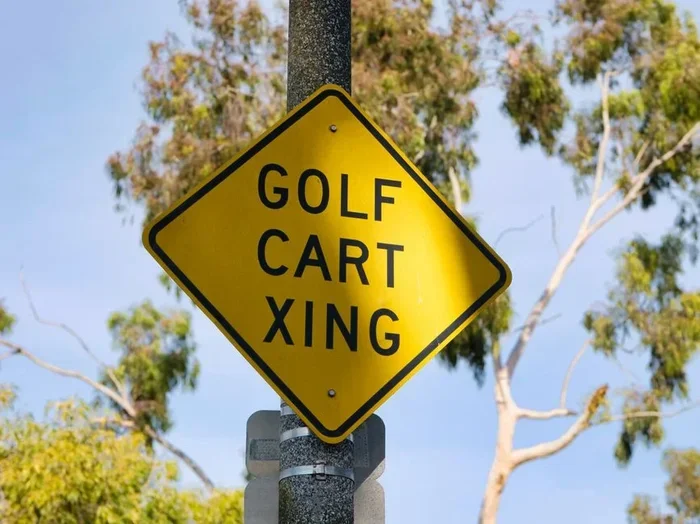
- Certain crosswalks and intersections: Golf carts may cross roads with higher speed limits at designated crossings.
It is important to note that golf carts cannot be driven on highways or interstates in Florida. These roads are simply too fast for a low-speed vehicle. Driving a golf cart on an interstate is illegal and extremely dangerous.
Safety Equipment Requirements for Street-Legal Golf Carts
Just because you can drive a golf cart on certain roads does not mean you can drive any golf cart. Florida has specific safety equipment requirements that must be met before a golf cart is considered street legal. Without these features, you could face a fine or be told to stop driving on public roads.
Required Safety Features
To make your golf cart legal for road use in Florida, it needs the following equipment:
- Headlights: Both a left and right headlight that are visible from at least 500 feet.
- Tail lights and brake lights: These must be visible from behind for at least 500 feet.
- Turn signals: Front and rear turn signals are required.
- Reflectors: Red reflectors on the rear and amber reflectors on the sides.
- Rearview mirror: A mirror mounted on the driver’s side.
- Seat belts: Required if the cart has seats designed for belted occupants.
- Windshield: Recommended for road use to protect from debris.
Adding these features to your golf cart is a common practice among Florida owners. Many people upgrade their carts with custom lighting kits and safety accessories specifically for road use. If you plan to drive on public roads, investing in these upgrades is not just smart, it is the law.
Quick Tips for Golf Cart Safety
Here are some practical tips to keep your golf cart safe on the road:
- Always check your lights before driving at dusk or dawn.
- Wear a helmet, even if it is not legally required in your area.
- Stay in designated lanes and follow all traffic signs.
- Avoid driving in bad weather, especially heavy rain or fog.
- Keep your golf cart well-maintained and check tires regularly.
Local Ordinances and City Rules in Florida
Florida state law sets the minimum standard, but local governments can make their own rules. This means that golf cart regulations vary from city to city and even from county to county. Before you drive your golf cart on any road, it is a good idea to check your local ordinances.
Cities Known for Golf Cart-Friendly Roads
Some Florida cities are much more golf cart friendly than others. Communities built around golf courses and retirement areas often have relaxed rules. Cities like Naples, Sarasota, and The Villages are well known for their golf cart culture. In these areas, you will see carts on roads every day.
On the other hand, some cities have stricter rules. They may limit where golf carts can be driven or require additional permits. Always check with your local city hall or transportation department to understand the specific rules in your area.
Understanding Golf Cart Permits
Some Florida cities require a golf cart permit or decal to drive on public roads. These permits are usually easy to obtain. You may need to provide proof of insurance and show that your cart meets safety requirements. The permit fee is typically low, but the rules around it can vary.
Here is what you should do before driving in a new area:
- Check the city or county website for golf cart rules.
- Visit your local DMV or tax collector’s office.
- Ask neighbors or local residents about any unwritten rules.
- Look for posted signs that restrict golf cart use on certain roads.
Golf Cart Registration and Insurance in Florida
One of the most common questions about golf carts is whether they need to be registered or insured. The answer depends on where and how you use your cart. In many cases, the answer is yes, especially if you plan to drive on public roads.
Do You Need to Register Your Golf Cart?
Florida law does not require all golf carts to be registered. However, if your cart meets the definition of a low-speed vehicle and you drive it on public roads, registration may be required. The Florida Department of Highway Safety and Motor Vehicles handles registration for low-speed vehicles.
You will typically need the following to register your cart:
- Proof of ownership (bill of sale or manufacturer’s certificate).
- Proof of identity and residency.
- Evidence that the cart meets safety equipment requirements.
- Payment of the applicable registration fee.
The registration process is similar to registering a regular vehicle, but it is usually simpler. Many owners complete it at their local Florida DMV or tax collector office. It is a good idea to have your cart inspected before you go to make sure it meets all the requirements.
Is Golf Cart Insurance Required in Florida?
Insurance requirements for golf carts vary. If you register your cart as a low-speed vehicle, you will likely need liability insurance. This type of coverage protects you if you cause an accident or damage to property. The cost of golf cart insurance is usually much lower than regular auto insurance.
Even if insurance is not legally required in your area, it is still a smart investment. Accidents can happen, and medical costs can add up quickly. A basic liability policy gives you peace of mind and financial protection.
Common Mistakes Golf Cart Drivers Make in Florida
Driving a golf cart on public roads comes with risks, especially for new drivers. Many people make avoidable mistakes that can lead to fines, accidents, or even injuries. Here are some of the most common errors and how to avoid them.
Mistake 1: Driving on High-Speed Roads
The most dangerous mistake is driving a golf cart on a road with a speed limit above 35 mph. Golf carts are slow and not built for high-traffic roads. Motorists may not see you, and the speed difference creates a serious safety hazard. Always check the posted speed limit before entering a road.
Mistake 2: Skipping Safety Equipment
Some drivers think they can get by without all the required safety features. This is a mistake. Missing headlights, brake lights, or turn signals can result in a traffic citation. More importantly, it makes your cart much harder for other drivers to see, especially at night.
Mistake 3: Ignoring Local Rules
State law is not the only law that applies. Many drivers get tickets because they do not know the local rules in their city or county. What is legal in one town may not be legal in the next town over. Always do your homework before driving in a new area.
Mistake 4: Overloading the Cart
Golf carts have a weight limit, and exceeding it can make the cart unstable. Overloading also strains the motor and brakes. Only carry the number of passengers your cart is designed for, and distribute weight evenly.
Expert Insights on Golf Cart Road Use in Florida
We reached out to local transportation experts and golf cart dealers to get their take on driving golf carts on Florida roads. Here is what they had to say.
Experts agree that Florida is one of the most golf cart friendly states in the country. The warm weather and flat terrain make it ideal for year-round golf cart use. However, they stress the importance of understanding the rules before driving on public roads.
“Many people buy a golf cart and assume they can just drive it anywhere,” says one local dealer. “That is not the case. They need to know the speed limits, the safety requirements, and the local rules. Taking a few minutes to learn the law can save you a lot of trouble.”
Another expert points out that golf cart safety has improved a lot in recent years. Modern carts come with better lighting, stronger frames, and more comfortable seating. This makes them more suitable for road use than older models.
When asked about the future of golf cart regulations, experts believe the rules will continue to evolve. As more people adopt golf carts for daily transportation, cities may update their ordinances to accommodate this growing trend. Staying informed about any changes to the law is important for all golf cart owners.
Conclusion
So, can you drive a golf cart on the road in Florida? Yes, you can, and many people do it every day. But it comes with responsibilities. You need to know the state laws, meet the safety equipment requirements, and follow local rules. Registering your cart and carrying insurance are also smart steps to take.
Driving a golf cart on Florida roads can be a fun and practical way to get around. Just remember to stay safe, stay informed, and always follow the rules. With the right preparation, you can enjoy all the benefits of golf cart road use in the Sunshine State.
Before you hit the road, take a moment to review your cart’s equipment and check your local regulations. A little effort goes a long way toward keeping you safe and legal. Happy driving, and enjoy the Florida sunshine.
Frequently Asked Questions
Can you drive a golf cart on any road in Florida?
No, you can only drive a golf cart on roads with a speed limit of 35 mph or less. Highways and interstates are not allowed for golf carts. Always check local signs and ordinances for any additional restrictions in your area.
Do you need a driver’s license to drive a golf cart on Florida roads?
Florida state law does not require a specific driver’s license for golf cart operation. However, some local jurisdictions may have their own requirements. It is always a good idea to carry a valid driver’s license when operating any vehicle on public roads.
What age do you need to be to drive a golf cart on the road in Florida?
Florida does not set a specific minimum age for golf cart drivers at the state level. However, many local ordinances require drivers to be at least 14 or 16 years old. Check your city or county rules to find the age requirement in your area.
Do you need to register a golf cart if you only drive it on your street?
It depends on your local rules. Some cities require registration even for neighborhood driving, while others do not. If your cart meets the low-speed vehicle definition and is driven on any public road, registration is more likely to be required.
Can you add seat belts to a golf cart for road use?
Yes, adding seat belts is a great idea for road use. Many golf cart owners install seat belts as part of their road-ready upgrades. Seat belts improve safety and may be required if your cart has seating designed for belted occupants.
Are golf carts allowed on sidewalks in Florida?
Generally, golf carts should not be driven on sidewalks. Sidewalks are designed for pedestrians, and golf carts can pose a danger to walkers and joggers. Stick to roads with appropriate speed limits and always yield to pedestrians at crosswalks.