All Types of Golf Clubs and How to Choose Them
Choosing the right all types of golf clubs can transform your game. This guide breaks down drivers, fairway woods, hybrids, irons, wedges, and putters in simple terms. You will learn what each club does, how to pick the right specs, and common mistakes to avoid.
Walking into a golf shop can feel overwhelming. Rows of shiny clubs line the walls, each one promising better distance, more accuracy, and lower scores. But here is the truth: all types of golf clubs are not created equal, and not every club belongs in your bag.
Whether you are a complete beginner just starting out or a seasoned player looking to upgrade your gear, understanding what each club does is the first step toward playing better golf. This guide breaks down every type of club you will ever carry on the course. We will explain what they do, when to use them, and how to choose the right ones for your game.
By the end of this article, you will feel confident walking into any pro shop and knowing exactly what you need. No more confusion. No more guessing. Just clear, practical advice that actually helps you improve.
Key Takeaways
- Know your clubs: Each type of golf club serves a unique purpose on the course.
- Match clubs to your skill level: Beginners benefit from forgiving clubs like hybrids and cavity back irons.
- Custom fitting matters: Getting the right shaft flex and grip size improves comfort and accuracy.
- Quality over quantity: A well-chosen set of 10-12 clubs beats a bloated bag of mismatched gear.
- Maintenance extends club life: Cleaning and storing clubs properly keeps them performing well.
- Try before you buy: Demo days and fitting sessions help you find the best clubs for your swing.
📑 Table of Contents
- What Makes Up All Types of Golf Clubs
- Drivers: The Longest Clubs in Your Bag
- Fairway Woods and Hybrid Clubs
- Irons: The Workhorses of Your Bag
- Wedges: The Short Game Essentials
- Putters: The Most Important Club in Your Bag
- How to Choose the Right Golf Clubs for You
- Common Mistakes When Choosing Golf Clubs
- Caring for Your Golf Clubs
- Final Thoughts on All Types of Golf Clubs
What Makes Up All Types of Golf Clubs
Every golf club has three main parts: the grip, the shaft, and the clubhead. The grip is what you hold. The shaft connects the grip to the clubhead. The clubhead is the part that actually hits the ball. Each part plays a big role in how the club performs.
Clubs are grouped into four main categories. These are woods, irons, wedges, and putters. Within each group, you will find many different types designed for specific shots and situations on the course. Let us take a closer look at each one.
The Basics of Club Design
Before we dive into specific clubs, it helps to understand a few key terms. The loft angle is the angle of the clubface. Higher loft means the ball goes higher but shorter. Lower loft means the ball flies farther but stays lower. The shaft flex refers to how much the shaft bends during your swing. A softer flex suits slower swing speeds, while a stiffer flex works better for faster swings.
The clubhead design also matters a lot. Some heads are larger and more forgiving. Others are smaller and more precise. Your choice depends on your skill level and what you want out of your game. Now let us look at each club type in detail.
Drivers: The Longest Clubs in Your Bag
The driver is often the first club amateurs think about when they build their golf club set. It is the biggest club in the bag and designed for maximum distance off the tee. When you stand on the tee box for a long par 4 or par 5, the driver is your go-to club.
Most drivers have a loft angle between 8 and 12 degrees. The larger clubhead size helps generate more speed and forgiveness on off-center hits. Modern drivers come with adjustable features that let you change the loft and weight distribution to suit your golf swing.
Who Should Use a Driver
If you want maximum distance off the tee, a driver is essential. However, beginners should know that drivers can be tricky to hit consistently. The large clubhead and low loft mean even small mistakes lead to big misses.
Here are some quick tips for choosing the right driver:
- Look for a forgiving clubhead: Larger heads with perimeter weighting help keep shots on target.
- Consider adjustable settings: These let you fine-tune the loft and draw or fade bias.
- Match the shaft flex to your swing speed: Ladies and seniors often do better with a regular or senior flex.
- Try before you buy: Demo days at local courses let you test different drivers before spending money.
Fairway Woods and Hybrid Clubs
Fairway woods are the next longest clubs after the driver. They are designed for long shots from the fairway or rough. The most common fairway wood is the 3-wood or 5-wood. These clubs have slightly more loft than a driver, which helps get the ball up in the air while still covering great distance.
Hybrid clubs are a modern alternative to long irons. They combine the best features of woods and irons. Hybrids have a smaller clubhead than a fairway wood but are easier to hit than a long iron. Many amateur players love hybrids because they offer approach shots with more accuracy and less effort.
When to Use Fairway Woods
Fairway woods shine when you need distance from the fairway or light rough. They are also great for tee shots on shorter par 4s where you want accuracy more than raw distance. Some players even use a 3-wood off the tee on tight holes where a driver is too risky.
Why Hybrids Are a Game Changer
If you struggle with your 3-iron or 4-iron, a hybrid can be a lifesaver. The design makes it easier to get the ball airborne and land it softly on the green. Hybrids are especially helpful for beginners who find long irons intimidating.
- Hybrids replace difficult long irons: Swap out your 3, 4, and 5 irons for matching hybrids.
- They work well from tricky lies: The wider sole helps the club glide through rough and sand.
- Great for all skill levels: Even advanced players carry hybrids for versatility around the course.
Irons: The Workhorses of Your Bag
Irons are the clubs you will use most during a round of golf. They cover a wide range of distances and are used for approach shots into the green. Most standard iron sets include clubs numbered 3 through 9, plus a pitching wedge. The higher the number, the shorter the distance and the higher the loft.
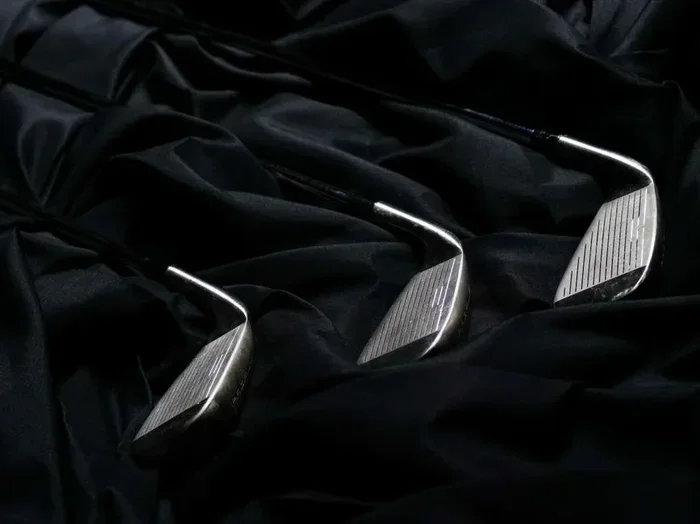
Irons come in two main designs: blade irons and cavity back irons. Blade irons have a thin, compact clubhead and are favored by skilled players who want precise control. Cavity back irons have a hollowed-out area behind the clubface that moves weight to the edges. This design provides more forgiveness on mishits, making them ideal for beginners and mid-handicap players.
Blade vs Cavity Back Irons
Blade irons give you a pure, workmanlike feel. They let you shape shots and control trajectory with precision. But they demand a consistent golf swing and solid contact. If you miss the sweet spot, the ball will suffer.
Cavity back irons are much more forgiving. Even on slightly off-center hits, the ball will still fly reasonably straight and far. This makes them the top choice for anyone still building their game.
| Feature | Blade Irons | Cavity Back Irons |
|---|---|---|
| Forgiveness | Low | High |
| Workability | Excellent | Moderate |
| Best For | Advanced players | Beginners to mid-handicappers |
| Clubhead Size | Small | Larger |
| Distance Consistency | Variable | More consistent |
How Many Irons Should You Carry
Most amateur players carry 6 to 8 irons in their bag. If you struggle with longer irons, replace them with hybrids. This is a smart strategy that keeps your bag manageable while still giving you the distance coverage you need.
Wedges: The Short Game Essentials
Wedges are specialized irons designed for short, high-precision shots. They have the highest loft angles of any club in the bag, which makes them perfect for getting the ball up quickly and landing it softly. There are four main types of wedges, and each serves a different purpose.
Types of Wedges
pitching wedge typically comes included in standard iron sets. It has a loft of around 44 to 48 degrees and is used for approach shots from 100 to 130 yards. The gap wedge fills the distance gap between the pitching wedge and the sand wedge, usually with a loft around 50 to 54 degrees.
The sand wedge is a must-have for any golfer. It has a wide sole and generous bounce angle that helps the club glide through sand without digging too deep. This makes escape shots from bunkers much easier. Finally, the lob wedge has the highest loft, around 58 to 64 degrees, and is used for short, high shots that stop quickly on the green.
- Pitching wedge: Approach shots from 100 to 130 yards
- Gap wedge: Fills the yardage gap between pitching and sand wedge
- Sand wedge: Bunker shots and short game around the green
- Lob wedge: High, soft shots over obstacles
Bounce Angle Explained
The bounce angle is the angle between the leading edge of the club and the lowest point of the sole. A higher bounce works well in soft turf and sand. A lower bounce is better for tight lies and firm conditions. If you play on firm courses, look for wedges with less bounce. If your courses have soft, fluffy rough, go with higher bounce.
Putters: The Most Important Club in Your Bag
Here is a secret that many beginners do not know: the putter is the most used club in any round of golf. You will use it on almost every hole, often multiple times. A good putter can save you several strokes per round, while a bad one can ruin an otherwise great game.
Putters come in many shapes and sizes. The three main types are blade putters, mallet putters, and belly putters. Blade putters have a classic, compact design and offer great feel. Mallet putters have a larger, more rounded clubhead that provides more stability and forgiveness. Belly putters are longer and rest against your body, which can help with a smoother putting stroke.
How to Choose the Right Putter
When choosing a putter, consider the grip size, the weight of the club, and the style of your putting stroke. Some players prefer a heavy putter for a steady, pendulum-like stroke. Others like a lighter putter that feels more responsive.
Here are some tips for finding your perfect putter:
- Try different head shapes: Mallet putters offer more alignment aids for beginners.
- Check the length: Your eyes should be directly over the ball when you address it.
- Focus on feel: A putter that feels good in your hands will inspire confidence on the greens.
- Do not overspend: A mid-range putter can perform just as well as an expensive one.
How to Choose the Right Golf Clubs for You
Now that you know what each club does, the real question is: how do you choose the right ones? The answer depends on your skill level, swing speed, budget, and personal preferences. There is no one-size-fits-all solution, but a few guidelines can point you in the right direction.
Consider Your Skill Level
Beginners should prioritize forgiveness and ease of use. Look for hybrid clubs instead of long irons, cavity back irons for consistency, and a forgiving driver with adjustable features. As your game improves, you can start adding more specialized clubs like blades and custom wedges.
Intermediate players benefit from upgrading individual clubs rather than buying a whole new set. Maybe your driver is holding you back, or your putter feels outdated. Focus on the clubs you use most often first.
Get Custom Fitted
One of the best investments you can make is getting custom fitting for your clubs. A professional fitter will analyze your golf swing, measure your swing speed, and recommend the right shaft flex, grip size, and club specifications. Custom fitting can dramatically improve your performance and comfort on the course.
Many golf stores and driving ranges offer fitting services. Even if you are on a tight budget, getting fitted for just your driver or putter can make a noticeable difference.
Build a Balanced Set
A well-balanced set of clubs covers all your distance needs without redundancy. A typical setup for an amateur might include:
- Driver for long tee shots
- 3-wood or 5-wood for long approach shots
- 2 to 3 hybrids to replace difficult long irons
- 6 through 9 irons and a pitching wedge for mid and short approach shots
- Gap wedge, sand wedge, and lob wedge for the short game
- Putter for everything on the green
This gives you 11 to 12 clubs, which is plenty for most rounds. Carrying fewer clubs can actually improve your focus and confidence on the course.
Common Mistakes When Choosing Golf Clubs
Even experienced golfers make mistakes when picking out new clubs. Here are the most common ones to avoid:
- Buying based on brand alone: Just because a club has a famous logo does not mean it is right for you.
- Ignoring shaft flex: The wrong shaft flex can ruin even the best clubhead design.
- Overbuying: Carrying too many clubs leads to confusion and indecision on the course.
- Neglecting the putter: Many players spend thousands on drivers and forget the club they use most.
- Skipping the fitting process: Off-the-rack clubs may not match your unique swing characteristics.
Quick Tips to Avoid Costly Mistakes
- Set a budget before you shop: Decide how much you are willing to spend and stick to it.
- Write down your needs: Know which clubs you are replacing or upgrading before you walk into a store.
- Ask for a demo: Most shops let you test clubs on their driving range before buying.
- Read reviews: Real player feedback gives you honest insights beyond marketing claims.
Caring for Your Golf Clubs
Once you have the right clubs, proper care keeps them performing at their best. Dirt and grass buildup on the clubface can affect spin and accuracy. Wipe your clubs clean after every round with a damp cloth.
Store your clubs in a cool, dry place. Extreme heat and moisture can damage grips and weaken shafts over time. Check your grips regularly for wear and replace them when they become slippery or hard. A fresh grip can make an old club feel like new.
Also, inspect your shaft flex and clubhead condition periodically. Small dents or scratches on the clubhead are usually harmless, but deep gouges can affect ball flight. Taking care of your golf equipment ensures it lasts longer and performs better round after round.
Final Thoughts on All Types of Golf Clubs
Understanding all types of golf clubs is one of the most valuable things you can do for your game. From the driver that launches your tee shots to the putter that sinks the winning putt, every club has a purpose. The key is to choose clubs that match your skill level, swing style, and personal goals.
Do not let the overwhelming variety intimidate you. Start with the basics, invest in quality over quantity, and always prioritize fit and feel. With the right clubs in your golf bag, you will walk the course with confidence and enjoy every single shot.
The best club in the world is the one that feels right in your hands and helps you shoot your lowest scores. Take your time, do your research, and trust your instincts. Your perfect set of clubs is out there waiting for you.
Frequently Asked Questions
What are the 14 clubs allowed in a golf bag?
Golf rules allow a maximum of 14 clubs in your bag during a round. Most players carry a driver, fairway woods, hybrids, irons, wedges, and a putter. The exact combination depends on your skill level and personal preference.
How often should I replace my golf clubs?
There is no set schedule for replacing clubs. If your clubs are damaged, your grips are worn, or your game has outgrown your current equipment, it is time for an upgrade. Many players replace clubs every 3 to 5 years.
Should beginners buy a complete golf club set?
Yes, a complete set is a great starting point for beginners. These sets include all the essential clubs at a lower price than buying individually. As you improve, you can upgrade specific clubs based on your needs.
What is the difference between a fairway wood and a hybrid?
Fairway woods have a larger clubhead and more distance potential, while hybrids have a smaller head and are easier to hit. Hybrids are designed to replace long irons and offer more forgiveness on mishits.
Does shaft flex really matter in golf clubs?
Yes, shaft flex has a big impact on shot accuracy and distance. A shaft that is too stiff or too flexible for your swing speed can cause inconsistent ball flight. Getting the right flex is one of the most important aspects of club fitting.
Can I use any putter I want on the golf course?
Absolutely. There are no rules limiting putter design. You can choose any putter style that suits your stroke, whether it is a classic blade, a mallet, or even a belly putter. The best putter is the one that gives you confidence on the greens.
=== CONCLUSION ===
Choosing the right all types of golf clubs does not have to be complicated. Each club in your bag serves a specific role, from the driver that sends your tee ball soaring to the putter that rolls in the final putt. Understanding these roles helps you build a balanced, effective set that matches your game.
Start by assessing your skill level and swing characteristics. Prioritize forgiveness if you are a beginner, and invest in custom fitting whenever possible. Avoid common mistakes like buying based on brand alone or carrying too many clubs. And remember to care for your equipment so it serves you well for years to come.
The right clubs give you confidence, consistency, and joy on the course. Use the knowledge from this guide to make smart choices, and watch your game improve one round at a time. Now go out there and enjoy your golf.