Average Golf Drive Distance By Age What You Need To Know
Average golf drive distance by age varies significantly, with younger golfers hitting farther and seniors seeing gradual declines after 50. Understanding your expected distance helps set realistic goals and identify areas for improvement. Whether you are a beginner or seasoned player, this guide covers everything you need to know about driver distance across all age groups.
Key Takeaways
- Drivers in their 20s and 30s typically average 230-270 yards, peaking in physical prime years.
- Golfers aged 40-50 see a gradual decline of 10-15 yards due to natural changes in swing speed and flexibility.
- Seniors over 60 average around 180-210 yards, but proper technique can minimize distance loss.
- Swing speed matters more than age alone, and training can help maintain distance at any stage of life.
- Equipment choices like the right driver and golf balls can add significant yardage regardless of age.
- Consistent practice at a driving range is one of the best ways to maintain and improve drive distance over time.
📑 Table of Contents
- Average Golf Drive Distance By Age: The Complete Breakdown
- Why Does Golf Drive Distance Change With Age?
- Average Golf Drive Distance By Age Group
- Factors That Influence Your Drive Distance Beyond Age
- How to Improve Your Drive Distance at Any Age
- Common Mistakes That Kill Your Drive Distance
- Expert Insights: What Golf Pros Say About Aging and Distance
- Conclusion
Average Golf Drive Distance By Age: The Complete Breakdown
Have you ever wondered how your golf drive distance compares to others in your age group? You are not alone. Average golf drive distance by age is one of the most searched topics among amateur golfers who want to benchmark their performance. Whether you are hitting the driving range at Ridgedale Drive or practicing at home, knowing where you stand is the first step toward improvement.
Golf is a game of continuous learning. Your drive distance changes as you age, and that is completely normal. The good news is that understanding these changes helps you set realistic expectations and focus on what really matters. This guide breaks down the numbers, explains why distance changes over time, and gives you practical tips to maximize your drives at every age.
Let us dive into the data and see what your golf swing should be producing right now. No matter your age, there is always room to get better.
Why Does Golf Drive Distance Change With Age?
Aging affects your body in ways that directly impact your golf game. Flexibility, muscle mass, and swing speed all decline gradually over time. But the story is not all bad. Many golfers maintain strong drives well into their 60s and beyond with the right approach.
Physical Changes That Affect Your Drive
Your body is the engine behind every golf shot. As you get older, several key physical factors start to shift:
- Loss of flexibility in your hips and shoulders reduces your range of motion during the swing.
- Decreased muscle mass means less power generation through the kinetic chain.
- Slower clubhead speed directly translates to less distance off the tee.
- Balance and stability can decline, affecting consistency more than raw distance.
- Recovery time increases, meaning you may not practice as often as you used to.
These changes do not happen overnight. Most golfers notice subtle shifts starting around age 40. By understanding this timeline, you can proactively address these changes before they hurt your game too much.
The Role of Swing Speed
Swing speed is the single biggest factor in how far you hit the ball. The faster you swing the club, the more energy transfers to the golf ball at impact. As we age, maintaining swing speed becomes the central challenge for most golfers. But here is the exciting part: swing speed can be trained and maintained regardless of your age.
Studies show that golfers who incorporate golf fitness routines into their weekly schedule can slow the natural decline in swing speed by several miles per hour. That difference can add 15 to 25 yards to your drives over time.
Average Golf Drive Distance By Age Group
Let us get into the numbers. These averages are based on data collected from thousands of amateur golfers and represent general trends. Your personal numbers may vary based on fitness, technique, and equipment.
Ages 20 to 30: The Prime Years
Younger golfers are in their physical prime. This age group generally has the highest swing speeds and the most flexibility. The average drive distance for golfers in their 20s and 30s falls between 230 and 270 yards. Male golfers in this bracket who are physically active or have golf-specific training can push toward the higher end of that range.
Key characteristics of this age group include:
- Average swing speeds of 105 to 120 mph.
- Peak muscle recovery allowing frequent practice sessions.
- Less accumulated swing errors or bad habits.
- Greater potential for raw distance with proper technique.
If you are in this age group, now is the time to build a strong foundation. Focus on proper mechanics and fitness habits that will serve you for decades.
Ages 40 to 50: The Transition Phase
For many golfers, the 40s and 50s mark a noticeable shift. The average drive distance drops to roughly 210 to 245 yards. This decline is gradual and often tied to lifestyle factors like desk jobs, reduced fitness routines, and the natural aging of connective tissues.
However, this phase also brings something valuable: experience. Golfers in this age group typically have better course management skills and more consistent swings than their younger counterparts. The slight loss in distance is often offset by better shot selection and smarter play.
Tips for golfers in this age bracket:
- Incorporate stretching into your daily routine to maintain flexibility.
- Focus on core strength exercises to support your golf swing.
- Consider getting a golf club fitting to optimize your equipment for your current swing profile.
- Use golf fitness training programs designed for mature athletes.
Ages 50 to 60: Maintaining Distance
Golfers aged 50 to 60 typically average between 195 and 225 yards. This is where the decline becomes more apparent, but it is far from the end of the road. Many golfers in this group still hit the ball impressively far by focusing on technique over brute force.
The key at this stage is efficiency. A well-sequenced swing with good contact will outperform a wild swing every time. Work on center-face contact and optimizing your launch angle for maximum carry distance.
Ages 60 and Beyond: Senior Golfers
Senior golfers over 60 often average 170 to 210 yards with the driver. But do not let these numbers discourage you. Plenty of golfers in this age group continue to enjoy the game at a high level. The focus shifts from pure distance to accuracy, consistency, and course strategy.
Many senior golfers find that switching to a lighter shaft or a higher-lofted driver helps maintain distance without straining the body. The right equipment choices can make a meaningful difference at any age.
Factors That Influence Your Drive Distance Beyond Age
Age is just one piece of the puzzle. Several other factors play a huge role in determining how far you hit the ball. Understanding these factors gives you more control over your performance than you might think.
Equipment Matters More Than You Think
The golf club and ball you use have a direct impact on your distance. A properly fitted driver can add 10 to 20 yards to your drives almost instantly. Here are some equipment considerations:
- Driver loft: Higher lofts (10.5 to 12 degrees) help older golfers achieve optimal launch angles.
- Shaft flex: A softer shaft can help generate more clubhead speed for golfers with slower swings.
- Golf ball compression: Lower compression balls travel farther for golfers with slower swing speeds.
- Clubhead design: Modern drivers with adjustable weights allow you to fine-tune your launch conditions.
Investing time in club fitting is one of the best decisions any golfer can make. It is not about buying the most expensive club. It is about finding the right match for your current swing characteristics.
Fitness and Flexibility
Your physical condition plays a massive role in golf drive distance. Golfers who stay active and flexible consistently outperform their less-fit peers. Simple exercises like rotational stretches, resistance band work, and yoga can dramatically improve your swing mechanics and power output.
Even dedicating 15 minutes a day to golf-specific exercises can yield noticeable results within weeks. The key is consistency and targeting the muscles most involved in the golf swing.
Technique and Swing Mechanics
Proper technique often matters more than raw power. A golfer with a smooth, efficient swing will typically outdrive someone who tries to muscle the ball. Focus on these fundamentals:
- A consistent pre-shot routine that sets up proper alignment.
- Good hip rotation through the downswing.
- Maintaining spine angle throughout the swing.
- Releasing the clubhead smoothly through impact.
- Finishing in a balanced position.
These elements do not require youth or athleticism. They require practice and attention to detail. Anyone at any age can work on these fundamentals and see improvements.
How to Improve Your Drive Distance at Any Age
Now for the part you have been waiting for. How can you actually add yards to your drives? The strategies below work for golfers of all ages and skill levels.
1. Practice With Purpose
Mindless range sessions will not take you very far. Set specific goals for each practice visit. Work on one aspect of your drive at a time, whether it is tempo, alignment, or contact quality. Using training aids like alignment sticks and impact bags can accelerate your progress.
2. Optimize Your Launch Conditions
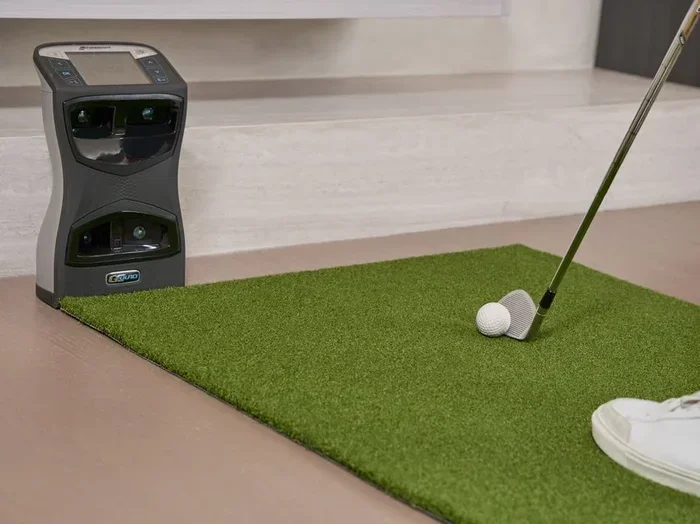
The ideal launch angle for most amateur golfers falls between 10 and 15 degrees with a spin rate around 2500 rpm. Getting these numbers right can add significant distance. Many driving ranges now offer launch monitors that measure these metrics for free. Take advantage of them.
3. Strengthen Your Core and Rotational Muscles
Your core is the bridge between your lower body and your arms during the swing. A strong core generates more power and transfers it more efficiently. Planks, Russian twists, and medicine ball rotations are excellent exercises for golfers of all ages.
4. Choose the Right Equipment for Your Swing
As your swing changes with age, your equipment should adapt too. Do not keep using the same driver you bought 15 years ago. Modern golf technology has advanced tremendously, and newer clubs are designed to help golfers achieve optimal performance at any swing speed.
Common Mistakes That Kill Your Drive Distance
Sometimes the problem is not what you are doing but what you are doing wrong. Here are the most common mistakes that rob golfers of distance:
- Swaying off the ball instead of rotating properly through the swing.
- Trying to hit too hard, which creates tension and slows the clubhead.
- Using the wrong loft for your swing speed and launch angle.
- Neglecting fitness and flexibility training entirely.
- Practicing without feedback from a coach or launch monitor.
- Gripping too tightly, which restricts wrist hinge and limits clubhead speed.
Fixing even one of these issues can produce immediate results. Start with the one that resonates most with your current game and work on it consistently.
Expert Insights: What Golf Pros Say About Aging and Distance
Professional golfers and coaches consistently emphasize that age is not the enemy of good golf. The real enemy is inactivity and neglect. Many touring professionals in their 40s and 50s continue to hit the ball 280-plus yards by prioritizing fitness and technique maintenance.
Coaches often tell their students that the goal should not be to hit the ball as far as possible at every age. The goal should be to hit the ball as far as you can consistently. Accuracy and fairway hits matter far more than raw distance for most amateur golfers.
Many golfers also find that playing at local courses and facilities keeps them motivated and engaged. Whether you practice at a driving range in The Colony or work with a personal coach, staying connected to the game is essential for continued improvement.
Conclusion
Average golf drive distance by age gives us a helpful benchmark, but it should never limit your expectations. Every golfer is different, and your personal drive distance depends on far more than just your birth year. Fitness, technique, equipment, and practice habits all play major roles.
The best thing you can do at any age is stay active, keep learning, and enjoy the process of improvement. Whether you are 25 or 75, there is always a way to hit the ball farther and more consistently. Use the data in this guide as a starting point, not a ceiling.
Get out there, practice with purpose, and watch your drives improve. The golf course is waiting for you.
Frequently Asked Questions
What is the average golf drive distance for a 30-year-old?
A 30-year-old golfer typically averages between 230 and 260 yards with a driver. This is near the peak of physical performance for most golfers. Fitness level, swing technique, and equipment all influence where you fall within this range.
How much does golf drive distance decrease after age 50?
Most golfers lose about 10 to 15 yards per decade after age 50. This decline is gradual and largely driven by reduced swing speed and flexibility. However, consistent fitness training and proper equipment can significantly slow this loss.
Can older golfers still add distance to their drives?
Absolutely. Older golfers can add distance through fitness training, technique improvements, and better equipment choices. Even small changes like optimizing your driver loft or improving your swing tempo can yield meaningful gains at any age.
Does the type of golf ball affect drive distance?
Yes, golf ball choice matters. Lower compression balls generally travel farther for golfers with slower swing speeds. The right ball for your swing speed can add 5 to 15 yards to your drives. It is a simple upgrade with real results.
How often should I practice at a driving range to maintain distance?
Most golfers benefit from practicing at least once or twice a week. Consistency matters more than frequency. Short, focused sessions with specific goals are more effective than long, unfocused range visits. Even 30 minutes of targeted practice can make a difference.
What is the best driver loft for older golfers with slower swing speeds?
Golfers with slower swing speeds generally benefit from higher driver lofts between 10.5 and 12 degrees. A higher loft helps get the ball airborne more easily and optimizes launch conditions for maximum distance. Getting fitted for the right loft is one of the best investments you can make.