Can You Play Golf in the Rain Everything You Should Know
Yes, you can play golf in the rain, but it comes with challenges and risks that every golfer should understand. From choosing the right waterproof gear to adjusting your strategy on wet fairways, knowing how to handle rainy conditions can save your round — and keep you safe. Whether you are a beginner or a seasoned player, this guide covers everything you need to know about playing golf in wet weather.
There is something magical about a round of golf on a misty morning. The air feels fresh. The greens look crisp. But then the clouds roll in, and suddenly you are wondering if you should keep playing or head to the clubhouse.
So, can you play golf in the rain? The short answer is yes. But the full answer is a lot more nuanced. Playing golf in wet conditions brings unique challenges that can affect your safety, your score, and your overall enjoyment. Whether you are dealing with a light drizzle or a full-on downpour, knowing what to expect makes all the difference.
This guide walks you through everything you need to know about golfing in rain. We will cover safety concerns, the right gear, strategy changes, and even course conditions. By the end, you will feel confident stepping onto the tee box no matter what the sky throws at you.
Key Takeaways
- You can play golf in the rain as long as there is no lightning or hazardous conditions on the course.
- Investing in waterproof golf gear like rain gloves and jackets makes a huge difference in comfort and performance.
- Rain changes ball flight, grip, and course speed, so you need to adjust your strategy accordingly.
- Always check the course rain policy and follow lightning safety rules before heading out.
- Wearing proper rain golf shoes with good traction prevents slips and injuries on wet turf.
- Understanding wet weather golf etiquette keeps the game enjoyable for everyone on the course.
📑 Table of Contents
Can You Play Golf in the Rain? The Short Answer
The simple truth is that most golfers can play golf in the rain unless conditions become dangerous. Light to moderate rain does not have to ruin your round. In fact, many experienced players actually prefer wet conditions because the ball flies shorter and the greens play slower.
But there is a big difference between a gentle drizzle and a thunderstorm. The United States Golf Association (USGA) and most local courses have clear rules about when play must stop. Lightning is the number one reason courses suspend play. If you hear thunder or see lightning, you need to seek shelter immediately.
Light rain also affects how the ball behaves. A wet golf ball does not travel as far because moisture adds weight and changes the aerodynamics. Your grip becomes slippery, and your footing on the turf is less stable. These are all factors that come into play when you decide to keep going.
Most courses will post their rain policy at the pro shop or on their website. Some courses allow play in light rain but suspend it during heavy storms. Others have specific rules about when the grounds crew will stop mowing or close certain holes. Checking these details before you tee off saves you from an unpleasant surprise.
One thing to keep in mind is that playing through rain is a personal choice. No one is forcing you to finish your round in a storm. If you feel uncomfortable or unsafe, there is no shame in calling it a day. Golf is a game meant to be enjoyed, not endured.
Safety Concerns: Lightning and Heavy Rain
Understanding Lightning Risks on the Course
Lightning is the most serious danger when golfing in rain. A golf course is one of the most exposed environments you can be in during a thunderstorm. Open fairways, tall trees, and metal clubs all increase your risk. The National Weather Service reports that lightning kills dozens of people every year in the United States, and outdoor recreational activities account for a significant portion of those tragedies.
If you are on the course and a storm rolls in, follow these steps:
- Stop playing immediately. Do not wait for the course ranger to blow the horn.
- Put down your clubs. Metal clubs conduct electricity and can attract lightning.
- Move to a sheltered area. The clubhouse, a designated lightning shelter, or even a metal-roofed cart shelter are your best options.
- Stay away from trees, water hazards, and open areas.
- Wait at least 30 minutes after the last sound of thunder before resuming play.
Many golfers do not realize that you do not need to be directly struck to suffer serious injury. Lightning can travel through the ground and through nearby objects. This is why seeking proper shelter is so important.
Heavy Rain and Flooding Hazards
Heavy rain can also create dangerous playing conditions. Standing water on fairways and greens makes the course unplayable in many areas. Flooded bunkers, washed-out cart paths, and slippery slopes all pose real risks. Course superintendents work hard to manage golf course drainage during storms, but sometimes conditions simply become too hazardous.
Playing in flooded areas can also damage the course. Walking on saturated turf causes permanent damage to the grass. This is why many courses enforce strict rules about staying on cart paths during heavy rain. Respecting these rules protects both the course and your safety.
Hypothermia and Cold Rain
Cold rain is another safety concern that people often overlook. When your body temperature drops, your muscles lose flexibility and your reaction time slows. This increases the risk of strains, sprains, and poor decision-making on the course. If the temperature drops below 50 degrees Fahrenheit and it is raining, make sure you are dressed warmly and consider cutting your round short if you start to feel cold.
Gear Up: What to Wear When Golfing in the Rain
Having the right gear makes or breaks a rainy round. The difference between a miserable experience and a perfectly enjoyable one often comes down to what you are wearing. Investing in quality waterproof golf gear is one of the best decisions any golfer can make.
Rain Gloves and Grip
Your hands are the first thing to suffer in the rain. A wet grip leads to slipping, which leads to mishits and frustration. A good rain golf glove is designed with materials that maintain traction even when soaked. The 2 In The Pink Golf Glove is a popular choice among golfers who want reliable grip in wet conditions. These gloves use synthetic leather that outperforms traditional cabretta leather when wet.
Some golfers carry a dry glove in their bag and switch halfway through the round. This simple habit can dramatically improve your feel around the greens. Keeping a small towel in your pocket to wipe down your grips between shots is another easy win.
Waterproof Jackets and Apparel
A waterproof golf jacket should be the centerpiece of your rainy day wardrobe. Look for jackets that are breathable, lightweight, and have sealed seams. You do not want a jacket that traps heat and makes you sweat, because that just replaces one form of discomfort with another.
Quick-dry pants and moisture-wicking shirts are also worth considering. Cotton clothing absorbs water and stays heavy, which will weigh you down and make you cold. Synthetic fabrics and merino wool are much better options for wet weather golf apparel.
Rain Golf Shoes and Footwear
Your feet are the foundation of every swing, so keeping them dry and stable is critical. Rain golf shoes with spikeless cleats or soft spikes provide excellent traction on wet surfaces. The Adidas Golf Shoes Tech Response are a great example of footwear designed to handle wet conditions with confidence. They feature waterproof uppers and outsoles that grip the ground even on soaked turf.
Waterproof shoe covers or galoshes are another option if you do not want to invest in a new pair of shoes. They slip over your regular golf shoes and keep your feet dry until you reach the clubhouse.
Other Essential Rain Gear
A few smaller items can make a big difference on a rainy day:
- Towels: Carry at least two towels — one for your clubs and one for your hands and face.
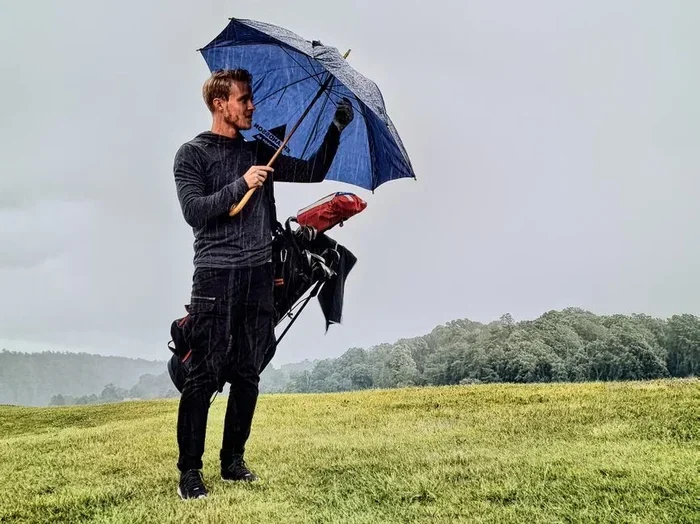
- Umbrella: A compact golf umbrella keeps you dry on the tee box and during cart rides.
- Ball markers and divot tools: Wet conditions make these small items harder to handle, so keep them in an easily accessible pocket.
- Extra socks: A fresh pair of dry socks in your bag can save your comfort level if your feet get soaked.
How Rain Changes Your Golf Strategy
Playing golf in the rain is not just about staying dry. It requires real adjustments to how you play the game. Understanding these changes helps you shoot a better score and feel more in control.
Ball Flight and Distance Changes
A wet golf ball does not fly as far as a dry one. The added weight and surface moisture reduce lift and increase drag. As a general rule, expect your shots to lose about 5 to 10 yards in light rain and up to 20 yards in heavy downpours. This means you may need to club up on approach shots and adjust your carry distances accordingly.
Wind often accompanies rain, which compounds the distance loss. A headwind in the rain can cut your distance even further. On the flip side, a tailwind might help offset some of the moisture-related loss. Always factor in both the rain and the wind when selecting your club.
Grip and Swing Adjustments
Your grip pressure tends to change in the rain. Most golfers grip too tightly when their hands are wet, which creates tension in the arms and shoulders. This tension leads to a stiff swing and poor ball striking. Consciously loosening your grip and focusing on a smooth tempo helps counteract this tendency.
Chipping and putting require special attention in the rain. Wet greens slow the ball down significantly, so you need to hit firmer putts and chips than usual. The wet weather golf strategy also involves reading the greens more carefully because rain can change the speed and break of the putting surface throughout the round.
Course Management in Wet Conditions
Smart course management becomes even more important when it is raining. Here are some tips:
- Avoid risky shots over water hazards. The wind and rain make accuracy harder to judge.
- Play to the center of the fairway rather than trying to shape shots around obstacles.
- Take extra time on the tee box to set up properly. Rushing leads to poor alignment.
- Use a wet weather golf strategy that prioritizes consistency over aggression.
Some golfers actually use rain to their advantage. Slower greens mean you can be more aggressive with your approach shots. The ball stops faster on wet putting surfaces, which can help you attack the pin from longer distances. Embracing the conditions rather than fighting them is a mindset that separates good rainy-day golfers from great ones.
Golf Course Conditions After Rain
Rain does not just affect your game while it is falling. The conditions it leaves behind can change how the course plays for hours or even days after the storm passes. Understanding these changes helps you plan your approach.
Firm and Fast Greens
After a rain, many courses become firm and fast. The water drains off the greens quickly, leaving the putting surfaces hard and quick. This means your putts will roll farther than usual, and you need to account for that when reading greens. Pay close attention to how the greens are playing and adjust your putting speed accordingly.
Soft Fairways and Rough
Fairways and rough tend to stay soft longer than greens. A ball sitting in wet rough sits down and is harder to extract. This is why playing to the center of the fairway becomes even more important after a rainstorm. The golf course conditions rain creates are often uneven, with some areas drying faster than others.
Bunker Conditions
Wet bunkers play completely differently than dry ones. The sand becomes heavy and compact, making it harder to get the ball out cleanly. Expect your bunker shots to come out lower and travel less distance. Taking a slightly larger divot and opening the face of your wedge helps compensate for the heavier sand.
Rules and Etiquette for Playing in Wet Weather
Local Rules and Course Policies
Every course has its own rules for playing golf in rain conditions. Some courses allow preferred lies, which means you can lift, clean, and place your ball within a specified area. Others play strict lift, clean, and place rules or no relief at all. Checking with the pro shop before your round ensures you know exactly what is allowed.
Cart rules often change during wet conditions. Many courses require carts to stay on designated paths to prevent damage to the turf. This is not just a rule — it is a courtesy to the course staff who work hard to maintain the conditions you enjoy.
Golf Etiquette in the Rain
Rain does not suspend the rules of etiquette. In fact, considerate behavior becomes even more important when everyone is dealing with uncomfortable conditions. Keep these etiquette tips in mind:
- Move quickly between shots to stay warm and keep your round moving.
- Offer to help fellow players dry their balls or clubs if you have extra towels.
- Repair your divots carefully, as wet turf is more fragile and harder to repair.
- Be patient with slower play. Everyone is dealing with the same conditions.
- Do not shake other players’ hands with a wet hand — a quick nod or smile works just as well.
Good etiquette in the rain shows respect for your playing partners and the course itself. It also makes the experience more enjoyable for everyone involved.
Final Thoughts
So, can you play golf in the rain? Absolutely. With the right preparation, gear, and mindset, a rainy round can be just as enjoyable — and sometimes even more memorable — than a perfect sunny day. The key is to stay safe, stay dry, and embrace the challenge that wet conditions bring.
Remember to check the weather forecast before you head out. Invest in quality waterproof gear. Adjust your strategy to account for the changes rain brings to the course. And most importantly, listen to your body. If conditions become unsafe, there is always tomorrow.
Golf is a game of adaptability. The players who improve the fastest are the ones who can handle any condition the course throws at them. So the next time the sky opens up, grab your rain golf gloves, pull on your waterproof jacket, and head to the first tee. You might just discover that some of your best rounds happen on rainy days.
Whether you are playing at a local municipal course or a resort facility, understanding how to handle golfing in rain sets you apart from the average player. It shows maturity, preparation, and a love for the game that goes beyond fair-weather golfing. So embrace the rain, adjust your expectations, and enjoy every shot.
At the end of the day, golf is about having fun. And fun does not stop just because the clouds roll in. With the knowledge you have gained from this guide, you are ready to face whatever the weather brings. Now get out there and enjoy your round.
Frequently Asked Questions
Is it safe to play golf when it is raining?
It is generally safe to play golf in light to moderate rain as long as there is no lightning. If you hear thunder or see lightning, you must stop playing immediately and seek shelter. Heavy rain and flooding can also create hazardous conditions on the course, so always assess the situation before continuing.
What gear do I need to play golf in the rain?
The essential gear includes a waterproof golf jacket, rain gloves, waterproof golf shoes, and a golf umbrella. Carrying extra towels and a change of socks in your bag also helps keep you comfortable throughout the round.
Does rain affect how far a golf ball travels?
Yes, a wet golf ball travels shorter distances than a dry one. The added moisture increases the ball’s weight and changes its aerodynamics. Expect to lose anywhere from 5 to 20 yards depending on the intensity of the rain.
Can you get a preferred lie in the rain?
This depends on the course’s local rules. Many courses allow preferred lies in wet conditions, but some do not. Always check with the pro shop before your round to understand the specific rules in effect.
How does rain affect putting on the greens?
Rain slows down putting surfaces because the grass absorbs moisture and becomes heavier. Putts tend to roll slower, and the break of the green can change as well. You will need to hit your putts firmer than usual on rainy days.
Should you play golf in the rain or wait for better weather?
This is a personal choice. If you have the right gear and feel comfortable, playing in the rain can be a great experience. However, if conditions are unsafe or you simply do not enjoy it, there is no obligation to play. Your enjoyment of the game matters most.