How to Fix Chicken Wing in Golf Swing Once and for All
The chicken wing in golf swing is one of the most common faults that ruins consistency and distance. This guide breaks down exactly why it happens and shows you simple, actionable fixes you can start using on the range today. You will learn drills, grip adjustments, and swing thoughts that eliminate the chicken wing for good.
The chicken wing in golf swing is a term every golfer has heard at least once. It describes that awkward position where the lead elbow bends and sticks out away from the body during the downswing. The result? A loss of power, inconsistent contact, and shots that curve all over the place.
If you have ever wondered why your drives feel weak or why your iron shots keep slicing, the chicken wing might be the hidden culprit. The good news is that fixing it does not require a complete overhaul of your swing. With the right drills, a few adjustments, and some practice, you can eliminate this fault and start hitting cleaner, more powerful shots.
This guide walks you through everything you need to know. From understanding what causes the chicken wing to step-by-step fixes you can use starting today, we cover it all. Let us dive in.
Key Takeaways
- Chicken wing happens when the lead elbow bends and stalls during the downswing: This creates a disconnected arm position that kills power and accuracy.
- Grip and posture are the root causes: A weak grip or poor setup posture often leads to the chicken wing forming in the first place.
- Simple drills like the towel drill and wall drill fix the problem: These exercises train your arms to stay connected through impact.
- Swing plane awareness is critical: Understanding your swing plane helps you keep the elbows in the right position throughout the downswing.
- Strength and flexibility work supports the fix: Building shoulder and core strength helps maintain proper arm positions under swing pressure.
- Professional instruction accelerates results: Working with a coach who understands swing mechanics can fast-track your correction.
📑 Table of Contents
What Is the Chicken Wing in Golf Swing?
The chicken wing gets its name from the way the lead arm looks during the downswing. Instead of staying connected to the body and extending toward the target, the elbow bends and flares out. It looks a lot like a bird flapping its wing, hence the name.
Here is what happens in a normal swing. As you start the downswing, the arms drop naturally, the elbows stay close to the body, and the club approaches the ball on a shallow plane. The lead arm extends through impact, creating a full, powerful release.
When the chicken wing shows up, the lead elbow stays bent and disconnected. The arm stops moving toward the target and instead pushes outward. This creates a steep, over-the-top swing path. The result is usually a slice, a thin shot, or a complete loss of distance.
Why the Chicken Wing Hurts Your Game
The chicken wing affects your shots in several ways. First, it reduces power. When the arm disconnects from the body, you lose the coil and release that generates clubhead speed. Second, it ruins consistency. A disconnected arm position makes it nearly impossible to repeat your swing time after time. Third, it causes directional problems. Most chicken wing swings produce a slice or a push-slice because the clubface remains open through impact.
Common Causes of the Chicken Wing
Understanding why the chicken wing happens is the first step toward fixing it. Several factors contribute to this swing fault, and most of them are fixable with the right approach.
Weak Grip
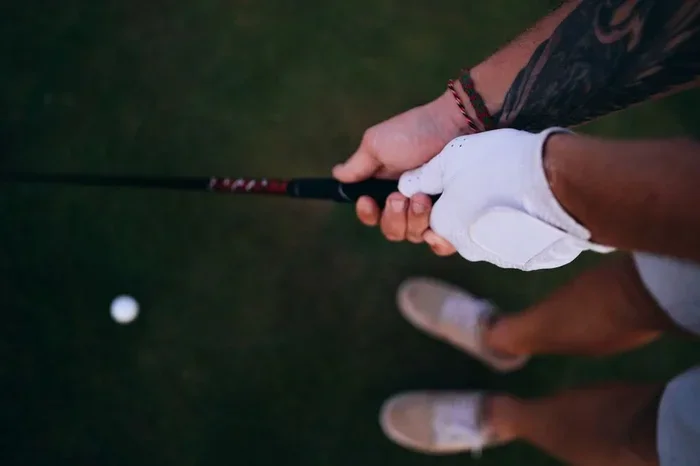
A weak grip is one of the biggest causes of the chicken wing. When your hands are rotated too far to the left on the club (for a right-handed golfer), it becomes very difficult to rotate the forearms through impact. The body tries to compensate by pushing the arms outward, which creates the chicken wing position.
Check your grip right now. If you can see more than two knuckles on your lead hand, your grip might be too weak. A neutral grip allows the arms to rotate freely and naturally through the hitting area.
Poor Posture and Setup
Your posture at address sets the tone for the entire swing. If you stand too upright or too far from the ball, your arms have nowhere to go but outward during the downswing. This open chest position encourages the elbows to separate from the body, leading directly to the chicken wing.
Good setup posture means a slight bend from the hips, a straight back, and the arms hanging naturally from the shoulders. This position gives the arms room to stay connected as you swing down.
Over-the-Top Swing Path
An over-the-top move is when the shoulders start the downswing before the lower body. This causes the club to come outside the ideal swing plane. To compensate, the lead arm bends and the elbow sticks out. The over-the-top path and the chicken wing almost always go hand in hand.
If you have ever been told you are coming over the top, there is a good chance the chicken wing is part of the problem. These two faults feed each other and create a cycle that is hard to break without targeted practice.
Lack of Lower Body Engagement
Many amateur golfers start the downswing with their upper body alone. The legs and hips should always lead the downswing. When the lower body sits still, the arms have to generate all the power. This leads to tension, and tension causes the elbow to bend and stall. The chicken wing is often the result of a lower body that is not doing its job.
How to Fix the Chicken Wing Step by Step
Now that you know what causes the chicken wing, let us look at the fixes. These drills and adjustments target the root causes and help you build a more connected, powerful swing.
Fix Your Grip First
Start by checking your grip. A neutral grip allows the forearms to rotate freely through impact. For a right-handed golfer, this means seeing about two and a half knuckles on the lead hand. The V shape formed by the thumb and index finger should point toward the trail shoulder.
A proper grip gives you the freedom to release the club through the hitting zone without forcing the arms into awkward positions. If your grip has been weak for a long time, this change might feel strange at first. Stick with it. The new grip will feel more natural after a few practice sessions.
Use the Towel Drill
The towel drill is one of the best ways to fix the chicken wing. Here is how it works.
- Take a small towel and tuck it under your lead arm, right against your side.
- Make slow-motion swings, focusing on keeping the towel pinned to your body.
- If the towel falls out, your arm has disconnected. That is the chicken wing.
- Repeat this drill 20 to 30 times on the range.
This drill trains your arms to stay connected to your body through the downswing. Over time, the feeling of keeping the elbows close becomes second nature. You will start to feel more power and control as the arm stays connected.
Try the Wall Drill
The wall drill is another excellent exercise for fixing the chicken wing. Stand with your lead side about six inches from a wall. Make your backswing, but do not let the clubhead touch the wall. Then start the downswing and focus on keeping the lead elbow close to your body as it moves down.
If the elbow separates and hits the wall, you know you have the chicken wing problem. Keep practicing until the elbow stays close and the club moves smoothly down the wall without hitting it.
Focus on the Downswing Sequence
The downswing should always start with the lower body. The hips rotate first, then the torso, then the arms, and finally the club. When you get this sequence right, the arms naturally stay connected and the chicken wing disappears.
Think of it like a wave. The hips start the motion, and that energy transfers up through the body to the arms and club. If you skip the lower body and start with the shoulders, the energy has to come from the arms alone. That is when the elbow bends and the chicken wing appears.
Strengthen Your Core and Shoulders
Physical fitness plays a bigger role in your swing than most golfers realize. Weak core muscles make it hard to maintain posture and rotation through the swing. Weak shoulder muscles lead to arm disconnect and the chicken wing.
Simple exercises like shoulder rotations, plank holds, and resistance band pulls can make a huge difference. You do not need a gym membership. A few minutes of targeted exercises each day will strengthen the muscles that keep your arms connected during the swing.
Drills to Reinforce the Fix
Fixing the chicken wing is not a one-time thing. You need drills that reinforce the correct positions so they become permanent. Here are a few drills that work well alongside the fixes above.
The Slow-Motion Swing
Take your normal swing but slow it down to 50% speed. Focus on feeling the lead arm stay connected to the body through the downswing. Pay attention to the moment of impact. Is the elbow still bent, or has it started to extend? The slow-motion swing builds the muscle memory you need to make the fix stick.
The Impact Bag Drill
Set up an impact bag or a stacked set of old towels about a foot in front of where the ball would be. Make swings and focus on hitting the bag with a fully extended lead arm. The bag gives you immediate feedback. If the arm is disconnected and bent, you will not hit the bag cleanly. This drill trains the correct position at impact.
Video Analysis
Recording your swing is one of the best ways to spot the chicken wing. Use your phone to film your swing from the front and the side. Look at the position of your lead elbow during the downswing. If it bends and sticks out, you have the chicken wing. If it stays connected and extends, you are on the right track.
Many golfers are surprised by what they see on video. What feels connected in your mind might look very different on camera. Use video to track your progress and make small adjustments along the way.
Consider Professional Instruction
Sometimes the chicken wing is deeply ingrained and hard to fix on your own. Working with a qualified instructor who understands swing mechanics can make all the difference. A good coach can spot the root cause, give you personalized drills, and provide real-time feedback that no video or article can match.
If you have been struggling with the chicken wing for a long time, investing in a few lessons is worth every penny. Look for an instructor who specializes in swing plane and connection issues. They will have the tools and experience to help you break through.
Equipment That Can Help
While the chicken wing is primarily a technique issue, the right equipment can support your fix. A properly fitted club helps you maintain better positions through the swing. Clubs that are too long or too short can encourage bad habits, including the chicken wing.
Make sure your golf bag setup includes clubs that match your height, swing speed, and skill level. If you are not sure about your club specifications, getting a professional fitting is a great next step. The right equipment removes variables and lets you focus purely on fixing your swing mechanics.
Common Mistakes When Trying to Fix the Chicken Wing
Even with the best intentions, golfers often make mistakes when trying to correct the chicken wing. Here are the most common ones to avoid.
- Trying to force the arm straight too early: The lead arm should extend naturally through impact. Forcing it straight before the downswing creates tension and new problems.
- Ignoring the lower body: The chicken wing fix starts from the ground up. If you only work on the arms, the problem will come back.
- Practicing without feedback: Swinging without watching your positions means you might be reinforcing the wrong habit. Always use video or a mirror when practicing new positions.
- Changing too many things at once: Focus on one fix at a time. If you change your grip, posture, and swing path all at the same time, you will get overwhelmed and make less progress.
How Long Does It Take to Fix the Chicken Wing?
The timeline depends on how long you have had the chicken wing and how consistently you practice. Most golfers start to see improvement within two to four weeks of targeted drills. The key is practice with purpose. Mindless range sessions will not fix the problem. You need focused, deliberate practice where you are working on one specific element at a time.
Start with the towel drill and the grip adjustment. Spend two to three weeks on those before moving on to the downswing sequence drills. Building the fix in layers makes it more likely to stick.
Final Thoughts
The chicken wing in golf swing is a frustrating fault, but it is also a very fixable one. Most golfers who struggle with it have a combination of grip, posture, and sequencing issues that all point to the same problem. By addressing the root causes and using the drills outlined in this guide, you can eliminate the chicken wing and start hitting better, more consistent shots.
Remember, the fix does not happen overnight. It takes patience, repetition, and a willingness to slow down and feel the correct positions. Start with one or two drills, build from there, and trust the process. Your swing will thank you.
If you want to take your game to the next level, consider exploring resources on grip fundamentals and working with a coach who can provide personalized feedback. Investing in your swing mechanics pays dividends every time you step on the course.
The chicken wing does not have to be part of your game anymore. Pick up a
Frequently Asked Questions
What is chicken wing in golf swing?
chicken wing in golf swing is an important topic with many practical applications.